Objectives
In CLOSER, our work is driven by the following objectives:
Co-create solutions with people on the ground
We don't build tools in an ivory tower. We aim to design practical frameworks that solve real-world problems—from immediate disaster response to long-term climate planning.
Advance integrated data on climate-related disasters
We are creating a single, open-access database that connects past extreme weather events to their actual human, social, and economic impacts.
Model the real impacts of climate disasters
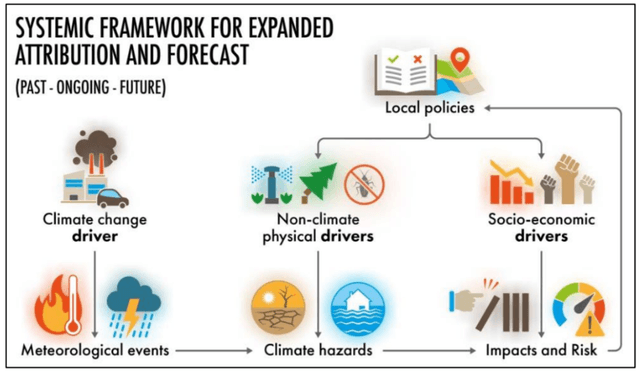
Extreme weather rarely hits in isolation. We capture the complexity of hazards, vulnerabilities, policies and other adaptations.
Uncover disaster drivers
We expand climate attribution science beyond just the weather. Our goal is to allow decision-makers to see how much a disaster was driven by rising temperatures versus bad planning decisions.
Learn from past policy mistakes to protect vulnerable communities
We analyze past and present policies to see mistakes and successes, and how they impacted different social groups. We want to help leaders design better, justice-focused policies for future disasters.
How We Do It: Our Methods
We bring together expertise across climate, AI, social science, and risk to solve a single challenge: understanding complex disasters in their full human and environmental context.
We achieve our objectives through two interlinked levels of action:
On the ground:
Co-Creation
Testing Real Needs
Across the Globe:
The Global Disaster Database
Our Attribution and Forecasting tool
Implementable Decision-Making Frameworks
Advisory Board
We invite established professionals to help us reach our objectives
Lorem ipsum dolor sit amet consectetur. Tellus ac eleifend cum eu. Netus bibendum vestibulum morbi eget at euismod leo. Amet tristique lacus massa in nunc sed scelerisque. Volutpat vestibulum adipiscing vitae sed sed mattis pharetra non. Lorem ipsum dolor sit amet consectetur. Lorem ipsum dolor sit amet consectetur. Tellus ac eleifend cum eu. Netus bibendum vestibulum morbi eget at euismod leo. Amet tristique lacus massa in nunc sed scelerisque. Volutpat vestibulum adipiscing vitae sed sed mattis pharetra non. Lorem ipsum dolor sit amet consectetur. Lorem ipsum dolor sit amet consectetur. Tellus ac eleifend cum eu.
Advisory person 1
Advisory person 2
Advisory person 3
Advisory person 4
Advisory person 5