DRIVERS OF HAZARDS
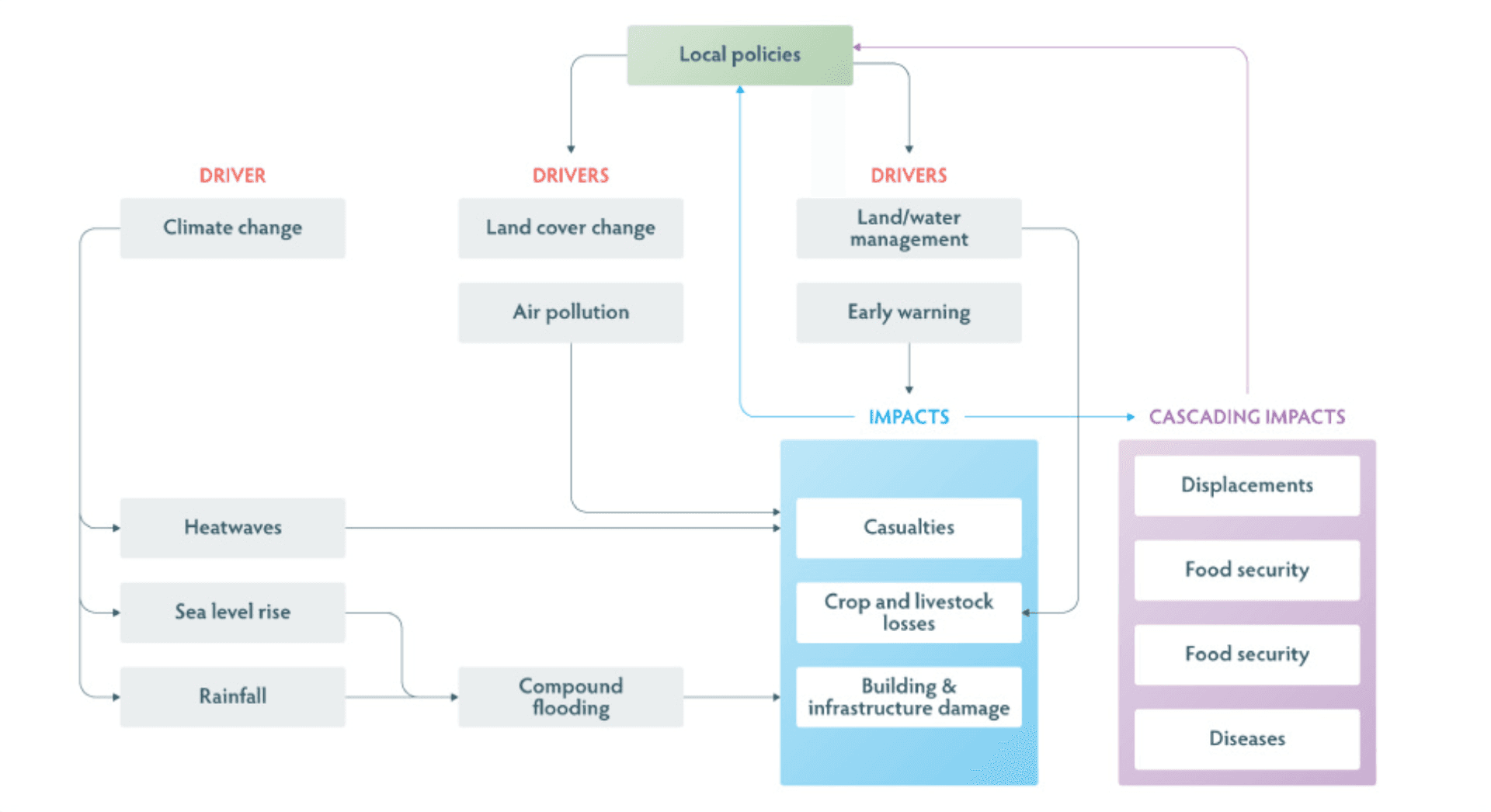
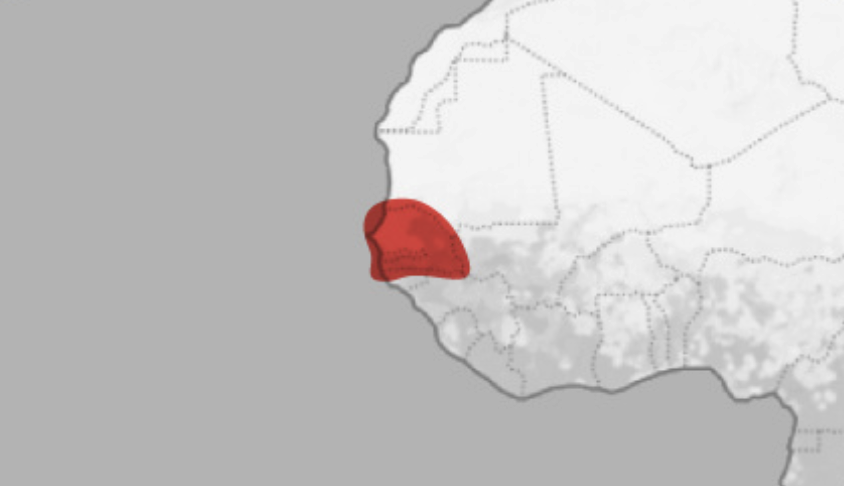
Recurring pluvial floods and escalating heatwaves afflict Senegal. Climate change drives increased rainfall intensity, more frequent (marine) heatwaves, and sea level rise that compound floods. Swings in ENSO and monsoon systems compound to generate both hazards at the same season.
IMPACT PATHWAYS
Between 1999 and 2009 flooding affected 170,000 to 900,000 people in Senegal. Floods and heatwaves cause crop and livestock losses, human health impacts and building and infrastructure damage. Non-climatic drivers include land-cover change, deforestation, rapid urbanisation, urban air pollution that aggravates health impacts, and inadequate early-warning systems.
CASCADING IMPACTS
Infrastructure failure hampers mobility, emergency response, and market access. Prolonged stagnant water following floods elevates vector-borne diseases. Repeated shocks drive displacement and crossborder migration within the Senegal river basin, undermining regional food security and deepening poverty.
MAIN CHALLENGE AND LESSON
Addressing these separate and compounding hazards and their ramified impacts requires a framework that: resolves seasonal effects and climatic teleconnections, captures all key drivers including land and water management. By linking hazard modelling with decision-making at the shorter (early warning) and longer time scales, attribution becomes actionable for resilience, food security and development.
KEY STAKEHOLDERS
CAG has a branch in West Africa (Togo) and coordinates work and stakeholders locally. ANACIM (SN); African Population and Health Research Center; WASCAL; ACMAD.
DRIVERS OF HAZARDS
Recurring pluvial floods and escalating heatwaves afflict Senegal. Climate change drives increased rainfall intensity, more frequent (marine) heatwaves, and sea level rise that compound floods. Swings in ENSO and monsoon systems compound to generate both hazards at the same season.
IMPACT PATHWAYS
Between 1999 and 2009 flooding affected 170,000 to 900,000 people in Senegal. Floods and heatwaves cause crop and livestock losses, human health impacts and building and infrastructure damage. Non-climatic drivers include land-cover change, deforestation, rapid urbanisation, urban air pollution that aggravates health impacts, and inadequate early-warning systems.
CASCADING IMPACTS
Infrastructure failure hampers mobility, emergency response, and market access. Prolonged stagnant water following floods elevates vector-borne diseases. Repeated shocks drive displacement and crossborder migration within the Senegal river basin, undermining regional food security and deepening poverty.
MAIN CHALLENGE AND LESSON
Addressing these separate and compounding hazards and their ramified impacts requires a framework that: resolves seasonal effects and climatic teleconnections, captures all key drivers including land and water management. By linking hazard modelling with decision-making at the shorter (early warning) and longer time scales, attribution becomes actionable for resilience, food security and development.
KEY STAKEHOLDERS
CAG has a branch in West Africa (Togo) and coordinates work and stakeholders locally. ANACIM (SN); African Population and Health Research Center; WASCAL; ACMAD.