DRIVERS OF HAZARDS
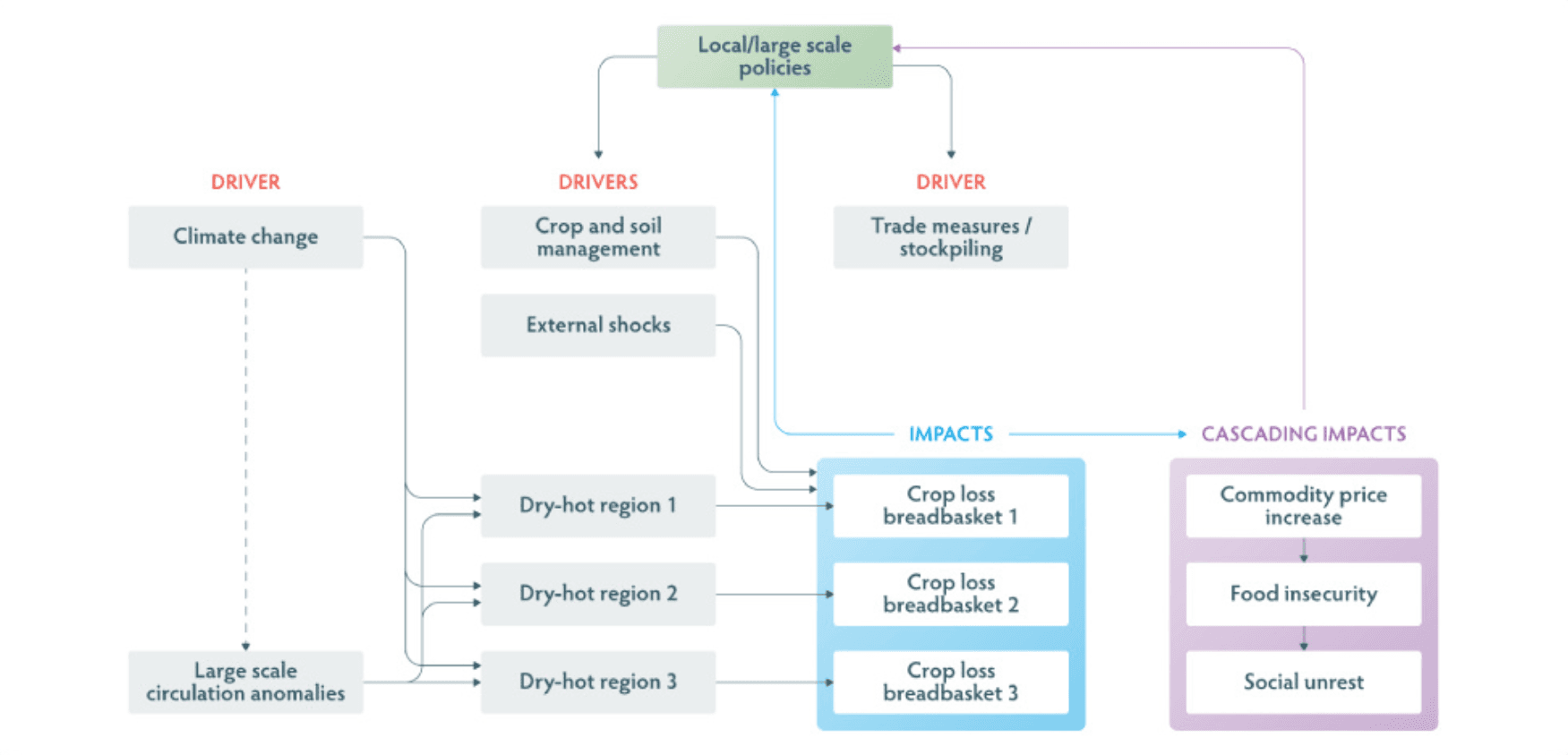
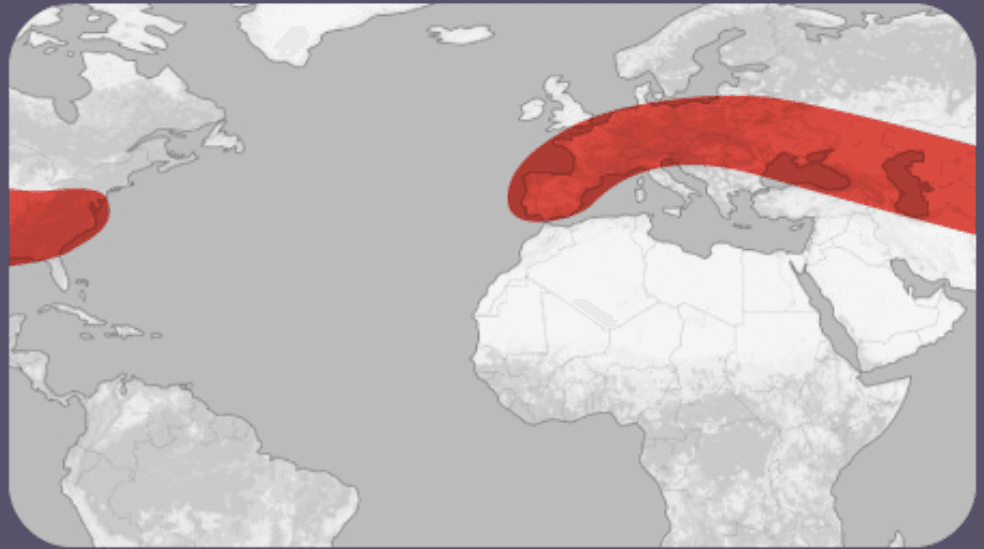
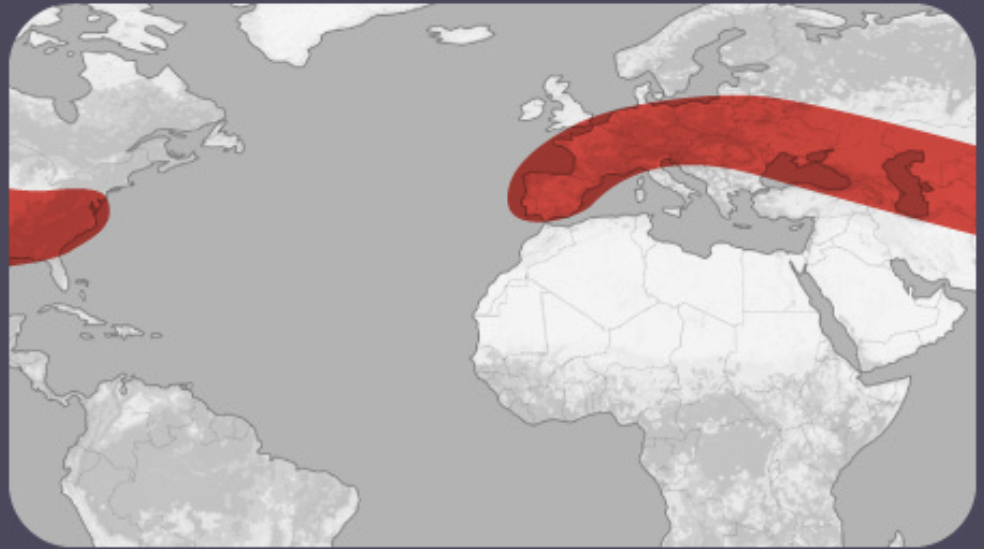
Climate oscillations (ENSO, NAO) and jet-stream patterns associated with persistent Rossby-wave "wave-5/7" can drive dry-hot conditions over the world's major breadbaskets simultaneously (Kornhuber et al., 2023). Global warming raises baseline temperatures, amplifies soil moisture drought, and increases the probability that dry-hot extremes impact multiple regions in the same growth season. Observed extremes combined with an Al crop model will identify particularly damaging conditions.
IMPACT PATHWAYS
These events slashed wheat, maize and rice yields in North America, Europe, East Asia and South Asia, in 2010, 2012, 2022, and 2023. Low strategic grain stocks, high fertiliser and energy costs, and export bans (e.g. Russia 2010, India 2022) increased the production shock and pushed commodity prices higher still. Other drivers are linked to high trade concentration, import dependence of low-income countries, speculative commodity markets, and conflict-related supply cuts.
CASCADING IMPACTS
In today's tightly linked trade network, simultaneous harvest failures propagate through global markets: nations dependent on food imports face supply gaps, price spikes trigger food-insecurity crises and social unrest, and humanitarian budgets become stretched. Simultaneous shocks also expose the financial sector, with implications also for operations in the Loss and Damage Mechanisms.
MAIN CHALLENGE AND LESSON
Global food security hinges on understanding and forecasting these multi-breadbasket risks. By integrating climate diagnostics, including for past severe events. crop-yield models and trade simulations we:
- Attribute past synchronous failures to climate change,
- Flag for early-warming early-season climate patterns with high shock potential, and
- Test policies in the areas of, e.g., crop diversification, trade, stockpiling.
KEY STAKEHOLDERS
FAO; World Bank Agriculture and Food Global Practice; Gallagher Re
DRIVERS OF HAZARDS
Climate oscillations (ENSO, NAO) and jet-stream patterns associated with persistent Rossby-wave "wave-5/7" can drive dry-hot conditions over the world's major breadbaskets simultaneously (Kornhuber et al., 2023). Global warming raises baseline temperatures, amplifies soil moisture drought, and increases the probability that dry-hot extremes impact multiple regions in the same growth season. Observed extremes combined with an Al crop model will identify particularly damaging conditions.
IMPACT PATHWAYS
These events slashed wheat, maize and rice yields in North America, Europe, East Asia and South Asia, in 2010, 2012, 2022, and 2023. Low strategic grain stocks, high fertiliser and energy costs, and export bans (e.g. Russia 2010, India 2022) increased the production shock and pushed commodity prices higher still. Other drivers are linked to high trade concentration, import dependence of low-income countries, speculative commodity markets, and conflict-related supply cuts.
CASCADING IMPACTS
In today's tightly linked trade network, simultaneous harvest failures propagate through global markets: nations dependent on food imports face supply gaps, price spikes trigger food-insecurity crises and social unrest, and humanitarian budgets become stretched. Simultaneous shocks also expose the financial sector, with implications also for operations in the Loss and Damage Mechanisms.
MAIN CHALLENGE AND LESSON
Global food security hinges on understanding and forecasting these multi-breadbasket risks. By integrating climate diagnostics, including for past severe events. crop-yield models and trade simulations we:
- Attribute past synchronous failures to climate change,
- Flag for early-warming early-season climate patterns with high shock potential, and
- Test policies in the areas of, e.g., crop diversification, trade, stockpiling.
KEY STAKEHOLDERS
FAO; World Bank Agriculture and Food Global Practice; Gallagher Re