DRIVERS OF HAZARDS
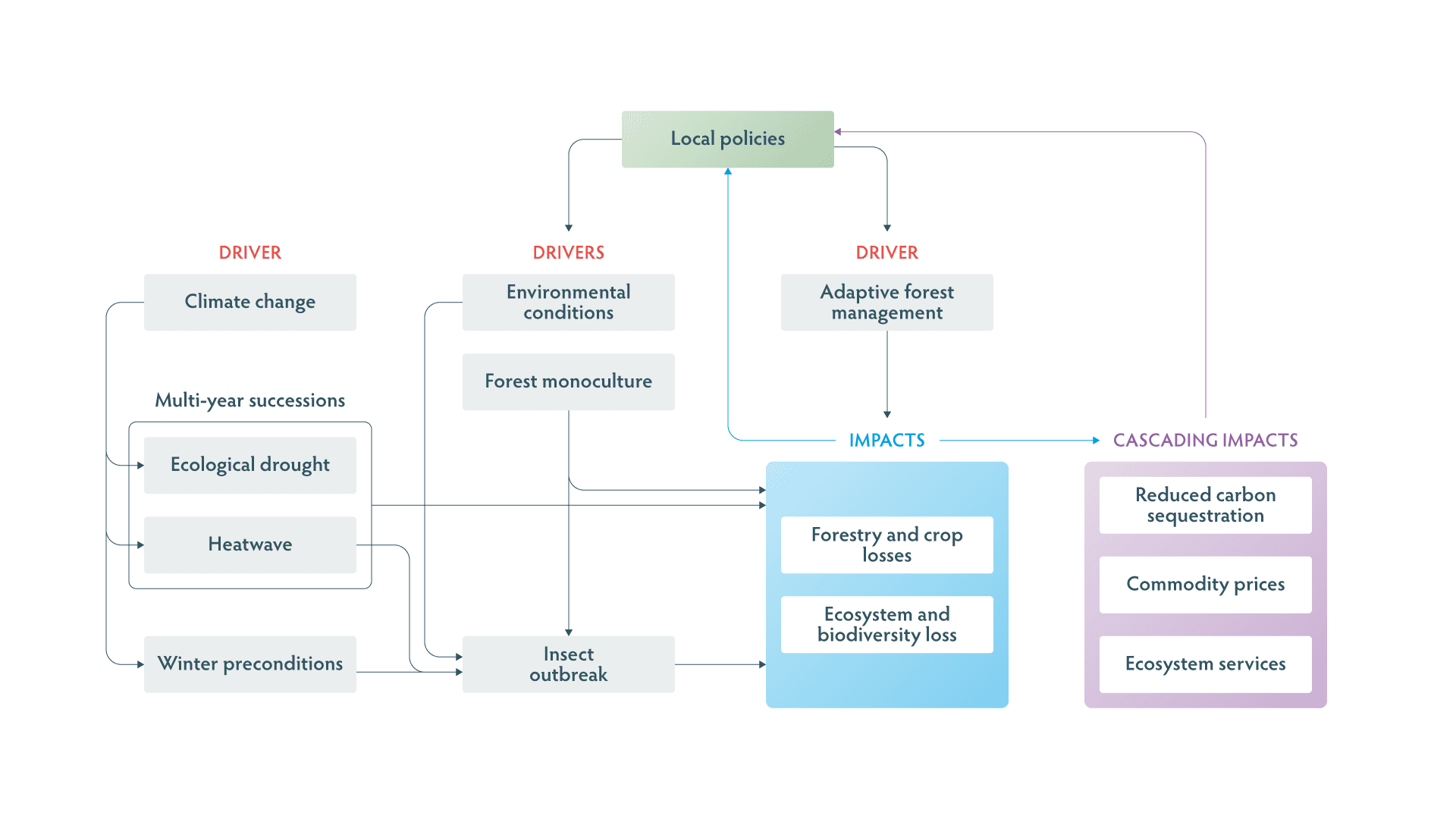
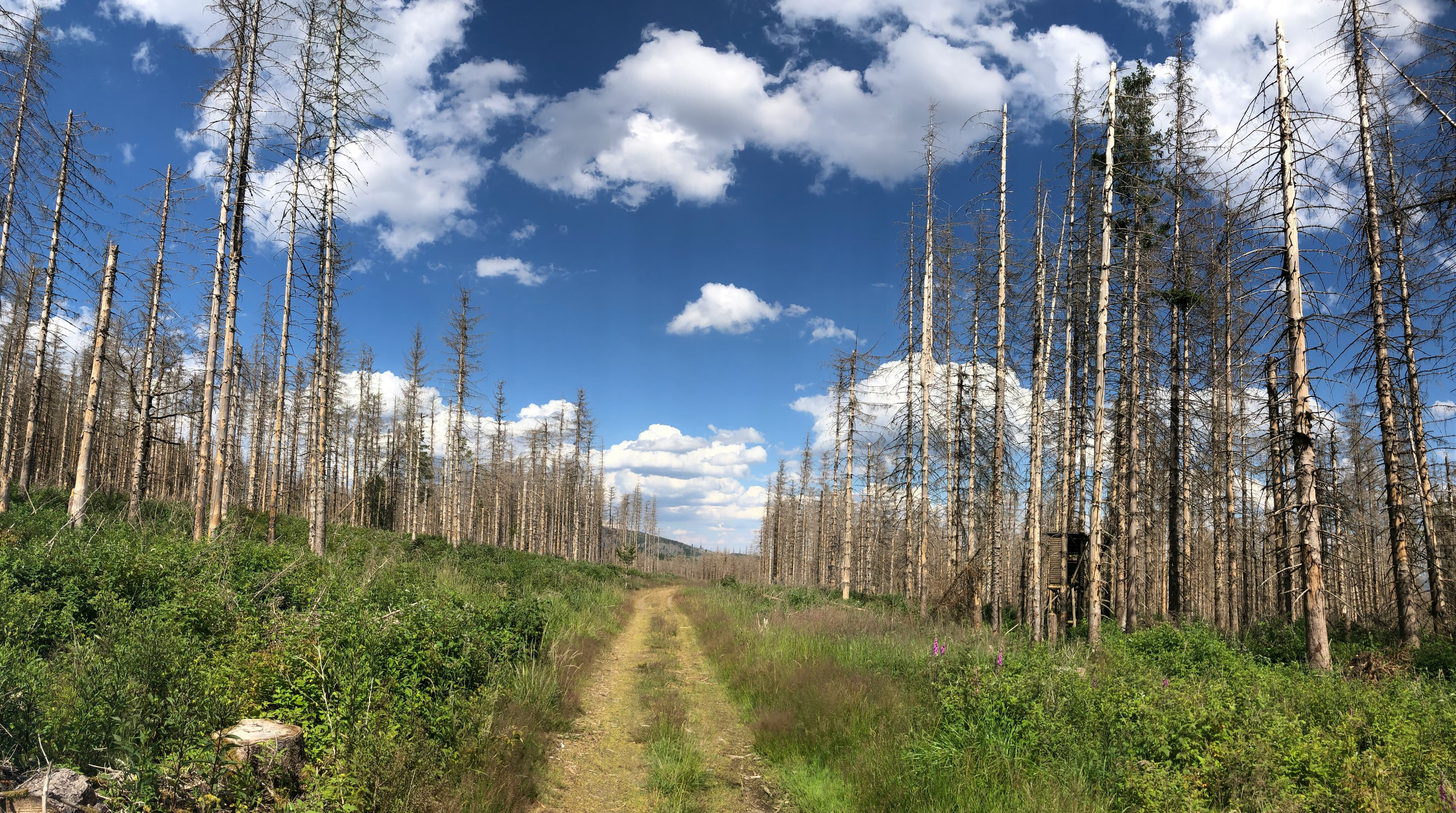
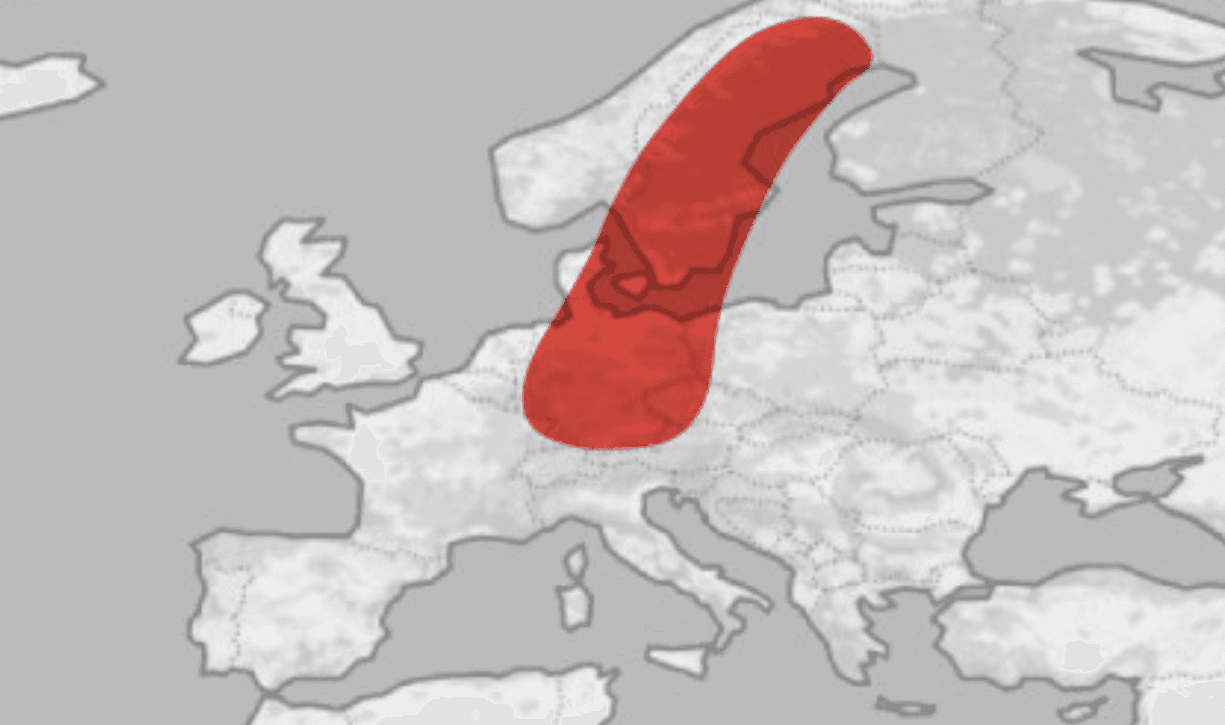
We attribute the dry-hot events occurring in central and northern Europe, such as in 2018 and in 2019, which drove rapid forest loss. Other main hazard drivers are winter-storms causing windthrow, and exceptionally mild winters boosting bark beetle populations (Mitton & Ferrenberg, 2012).
IMPACT PATHWAYS
The multi-year interaction of climatic and non-climatic drivers (forest management practices like monoculture of Norway spruce, and environmental phenomena like insect outbreaks) leads, on the one hand, to decreased plant productivity and unprecedented tree mortality, and on the other hand to ecosystem damage and biodiversity loss, and loss of local cooling and water cycling (Bastos et al., 2023).
CASCADING IMPACTS
These include costs for salvage-logging and volatile timber markets, weakened carbon-sink capacity resulting from reduced photosynthesis, and diminished ecosystem services like recreation, all issues now central to EU Green Deal. Via counterfactual biosphere-model simulations and causal networks we quantify each driver's role and separate confounding effects.
MAIN CHALLENGE AND LESSON
The attribution along temporal chains of extremes and the inclusion of interactions with management and environmental factors demands an attribution protocol that spans events, seasons, and sectors. The gained systemic insights serve stakeholders from national agencies to pan-European policy-makers.
KEY STAKEHOLDERS
Julius Kühn Institute for Forest Protection (DE); Skogforsk (SE).
DRIVERS OF HAZARDS
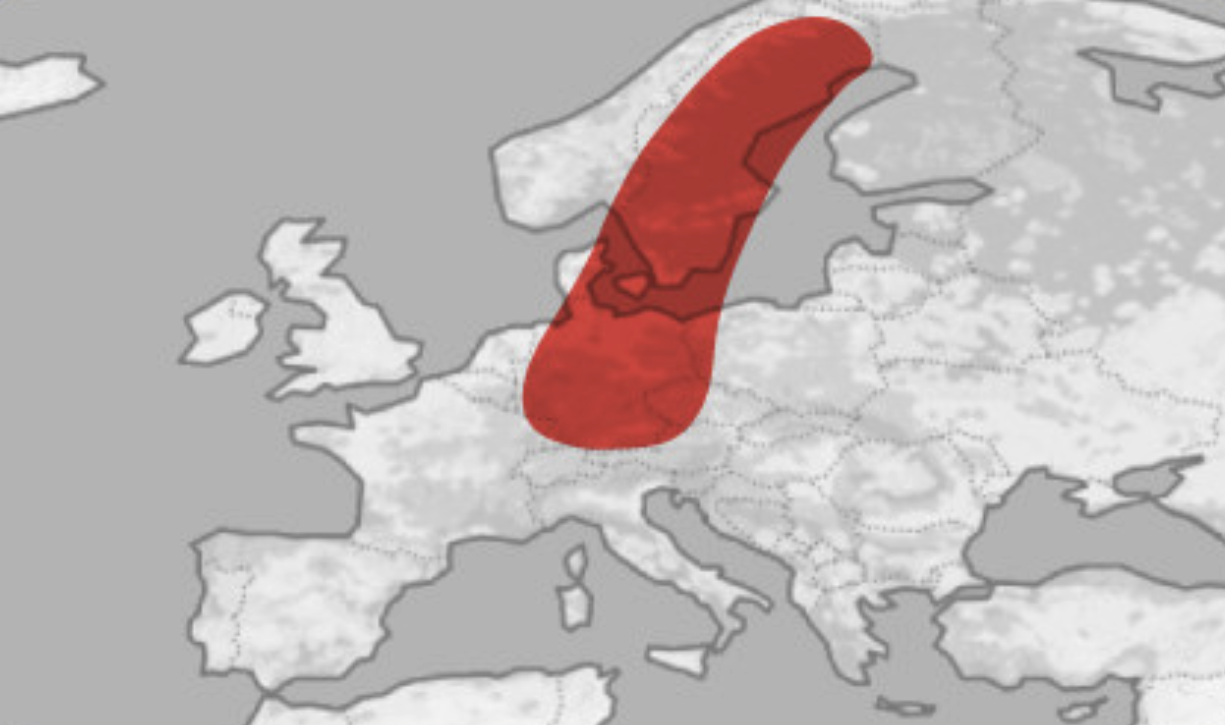
We attribute the dry-hot events occurring in central and northern Europe, such as in 2018 and in 2019, which drove rapid forest loss. Other main hazard drivers are winter-storms causing windthrow, and exceptionally mild winters boosting bark beetle populations (Mitton & Ferrenberg, 2012).
IMPACT PATHWAYS
The multi-year interaction of climatic and non-climatic drivers (forest management practices like monoculture of Norway spruce, and environmental phenomena like insect outbreaks) leads, on the one hand, to decreased plant productivity and unprecedented tree mortality, and on the other hand to ecosystem damage and biodiversity loss, and loss of local cooling and water cycling (Bastos et al., 2023).
CASCADING IMPACTS
These include costs for salvage-logging and volatile timber markets, weakened carbon-sink capacity resulting from reduced photosynthesis, and diminished ecosystem services like recreation, all issues now central to EU Green Deal. Via counterfactual biosphere-model simulations and causal networks we quantify each driver's role and separate confounding effects.
MAIN CHALLENGE AND LESSON
The attribution along temporal chains of extremes and the inclusion of interactions with management and environmental factors demands an attribution protocol that spans events, seasons, and sectors. The gained systemic insights serve stakeholders from national agencies to pan-European policy-makers.
KEY STAKEHOLDERS
Julius Kühn Institute for Forest Protection (DE); Skogforsk (SE).