DRIVERS OF HAZARDS
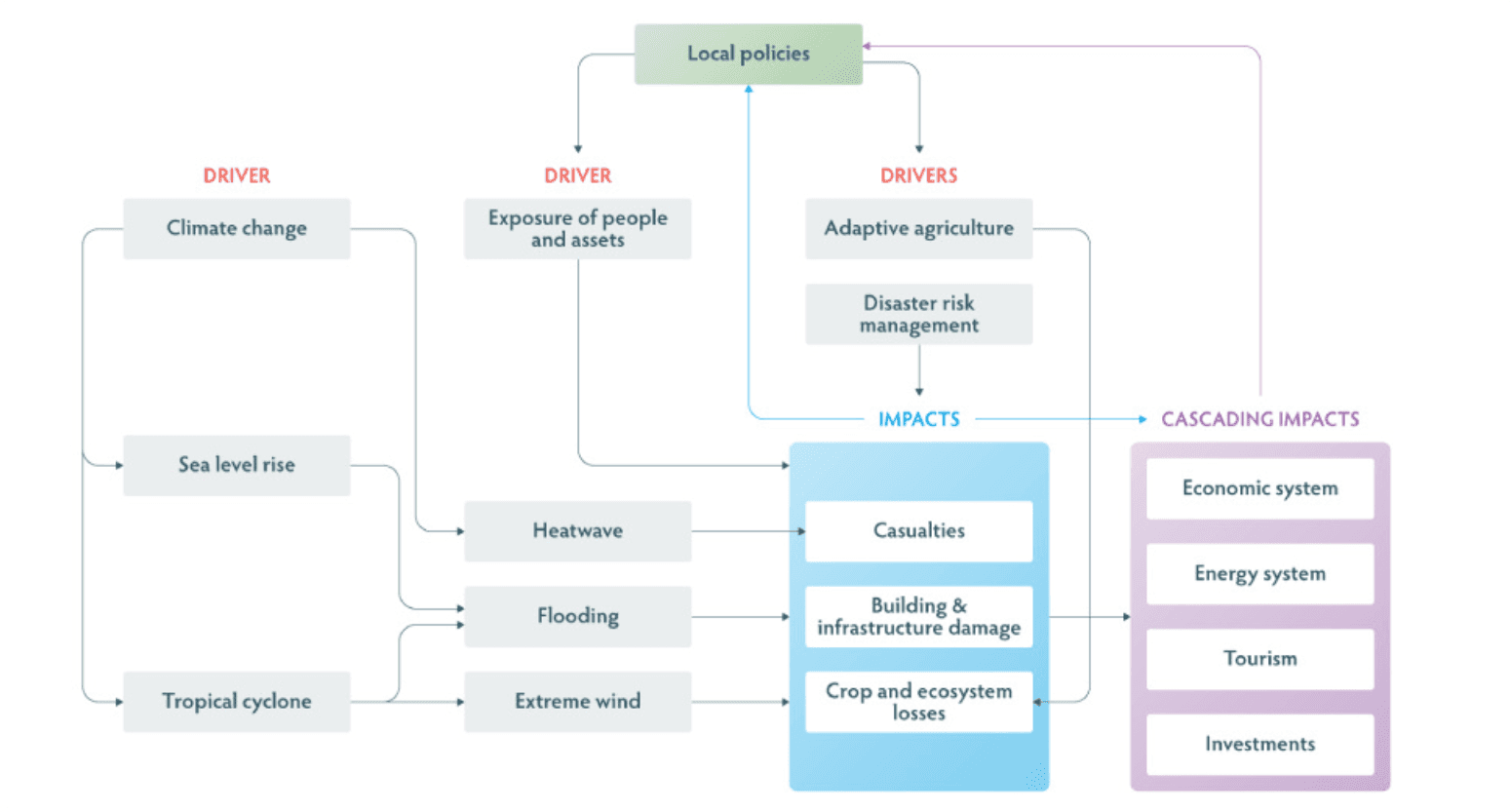
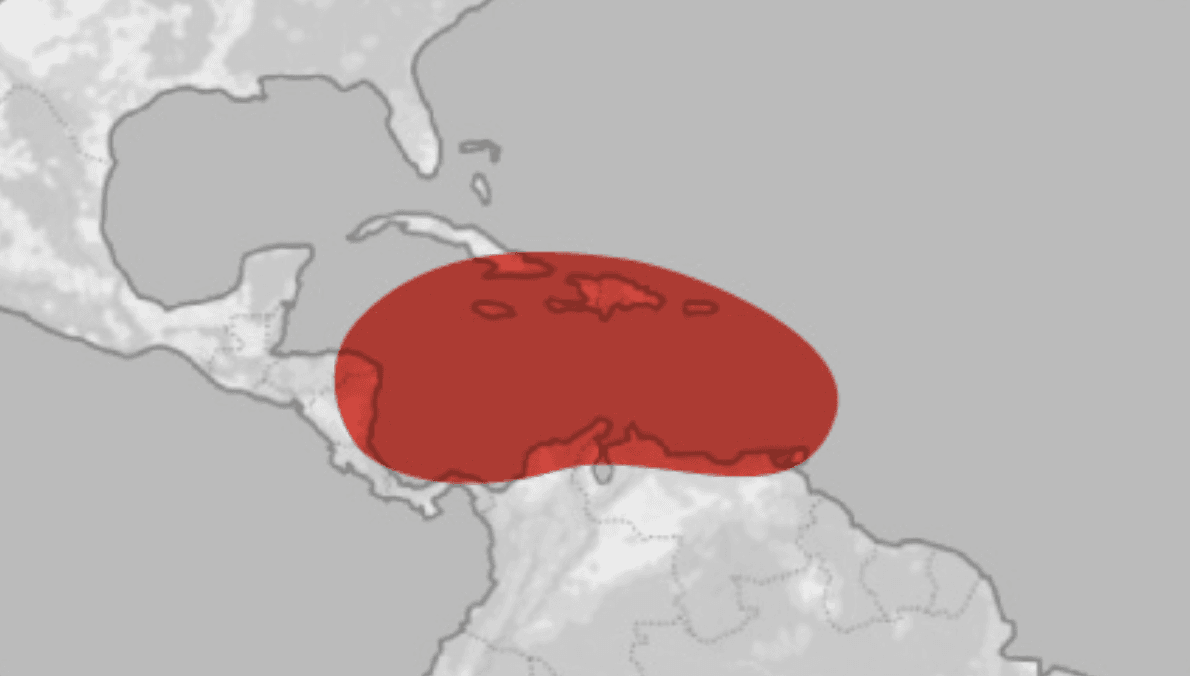
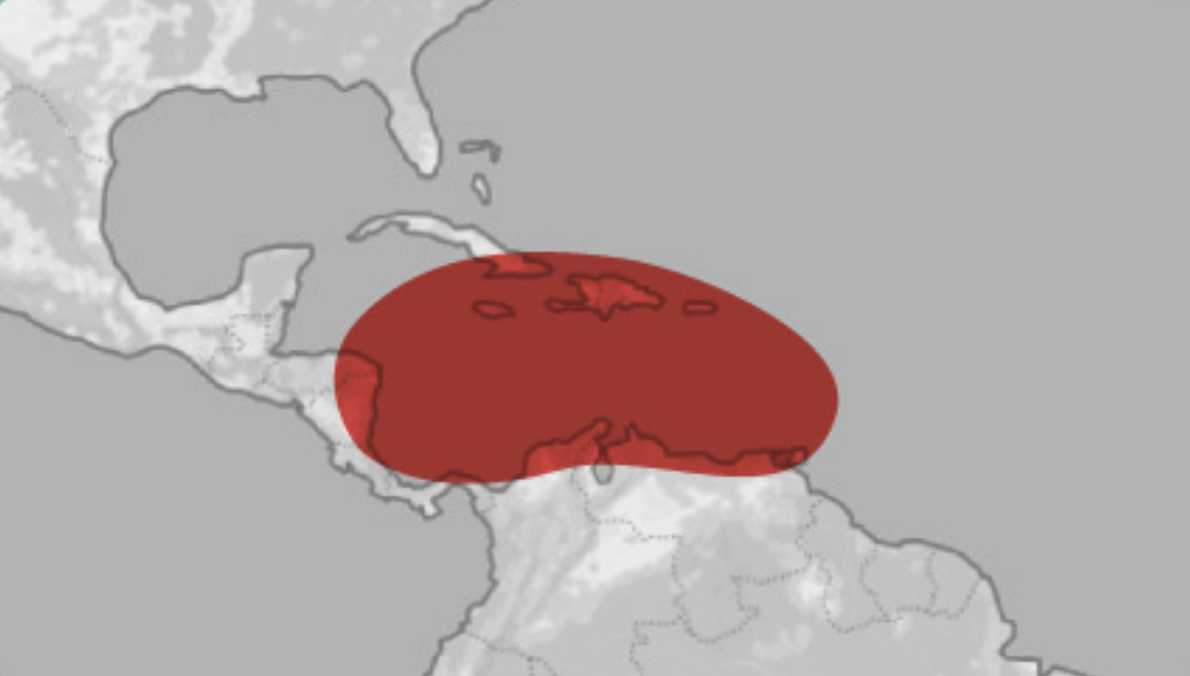
Islands of the Caribbean Community face severe impacts from tropical cyclones: from storm-surge, waves and extreme precipitation that generate compound flooding, and from extreme winds. Climate change alters features of cyclones, and sealevel rise exacerbates flooding. Further hotter heatwaves in occur in the wake of hurricanes (Guido et al., 2022). One recent such succession is hurricane Fiona of 2022.
IMPACT PATHWAYS
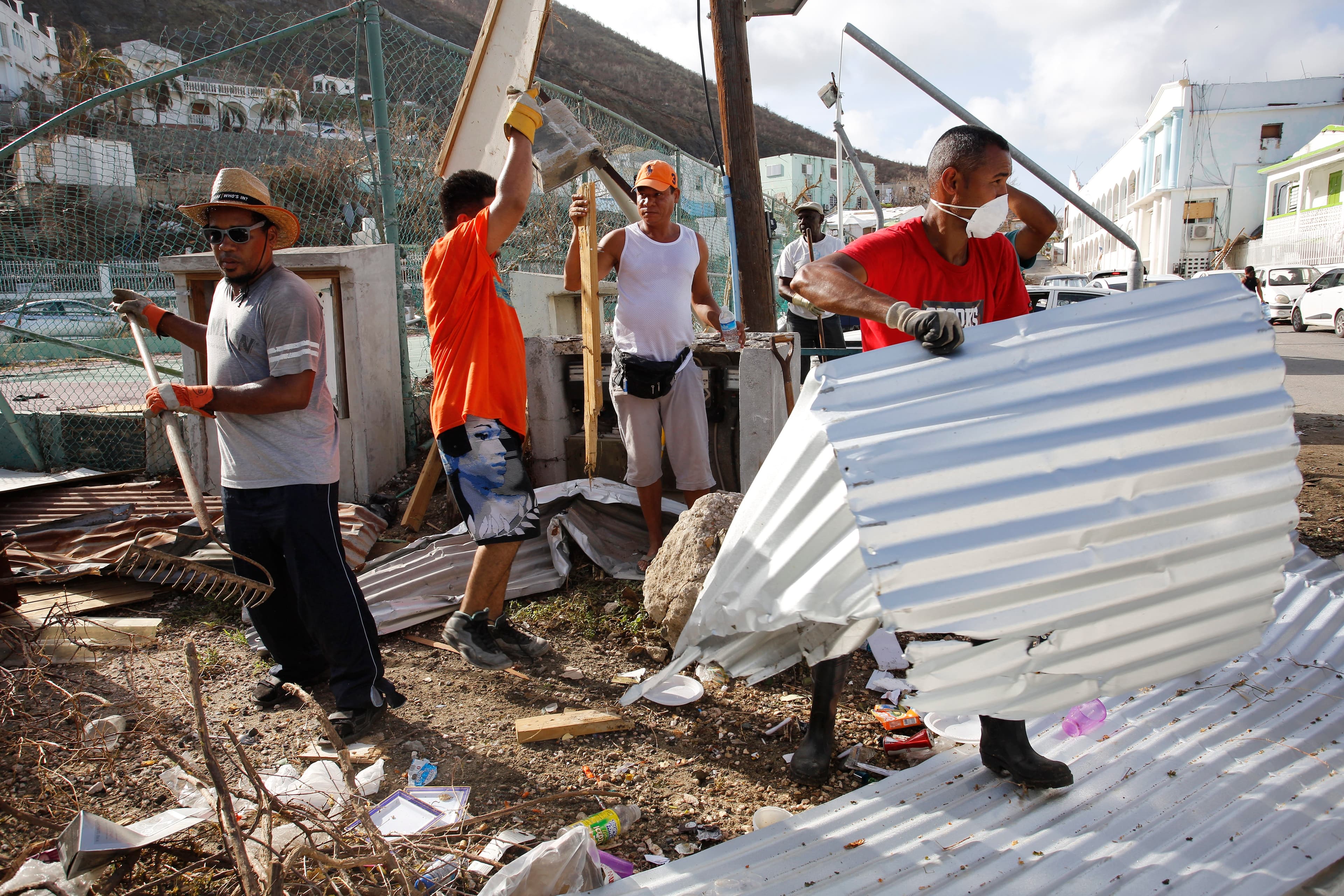
Hurricanes and heatwaves generate casualties and displacement among residents, damage to buildings, crops and critical infrastructure, and losses to coral reefs and mangroves. Additional key drivers are dense coastal exposure, limited defences and resilience of the infrastructure.
CASCADING IMPACTS
These include collapsed power grids, failure of access to water and healthcare infrastructure, reduced tourism and trade, increased insurance payouts, and delays in economic development (with attendant poverty, migration, and social strain). Heatwaves that follow hurricanes further worsen health impacts due to the collapsed power and health infrastructure.
MAIN CHALLENGE AND LESSON
This Case demands methods to: downscale cyclone activity and impact-relevant features from global models; account for multiple hazards (storm, flooding, heat); account for needs at scales from specific islands, to the region, and to the EU policy and the UNFCCC Loss & Damage Mechanism. We also select and study an appropriate event that happens during the project.
KEY STAKEHOLDERS
Caribbean Institute for Meteorology and Hydrology; CDEMA.
DRIVERS OF HAZARDS
Islands of the Caribbean Community face severe impacts from tropical cyclones: from storm-surge, waves and extreme precipitation that generate compound flooding, and from extreme winds. Climate change alters features of cyclones, and sealevel rise exacerbates flooding. Further hotter heatwaves in occur in the wake of hurricanes (Guido et al., 2022). One recent such succession is hurricane Fiona of 2022.
IMPACT PATHWAYS
Hurricanes and heatwaves generate casualties and displacement among residents, damage to buildings, crops and critical infrastructure, and losses to coral reefs and mangroves. Additional key drivers are dense coastal exposure, limited defences and resilience of the infrastructure.
CASCADING IMPACTS
These include collapsed power grids, failure of access to water and healthcare infrastructure, reduced tourism and trade, increased insurance payouts, and delays in economic development (with attendant poverty, migration, and social strain). Heatwaves that follow hurricanes further worsen health impacts due to the collapsed power and health infrastructure.
MAIN CHALLENGE AND LESSON
This Case demands methods to: downscale cyclone activity and impact-relevant features from global models; account for multiple hazards (storm, flooding, heat); account for needs at scales from specific islands, to the region, and to the EU policy and the UNFCCC Loss & Damage Mechanism. We also select and study an appropriate event that happens during the project.
KEY STAKEHOLDERS
Caribbean Institute for Meteorology and Hydrology; CDEMA.